
The Mistake: Assuming There's Nothing to Prep
The most common thing homeowners do as the weather cools off is nothing at all. It's an easy trap to fall into — if you grew up somewhere with real winters, "winterizing" means pipes, furnaces, and snow blowers, and none of that applies here. So the garage door gets ignored until spring. The problem is that late fall and winter in Indian Harbour Beach aren't a non-event for your garage door. They're the first stretch of calmer, drier weather after months of heat, humidity, and hurricane season, and that shift exposes problems that built up all summer. Skipping prep now just means you find out about them the hard way, usually on a morning when you're already running late.
Why This Season Actually Matters for Your Garage Door
After a summer of heat, humidity, and salt air, the air finally starts to dry out. That drop in humidity can cause wood panels and trim that swelled during the wet months to shrink back down slightly, which sometimes reveals gaps, loose fasteners, or a door that suddenly doesn't seal the way it did in August. At the same time, cold fronts moving through can bring sharp temperature swings and gusty winds — not hurricane-force, but enough to rattle a door that's already a little loose on its tracks or hardware.
This is also the first real chance to check for damage that hurricane season left behind. Even if nothing failed outright, wind load puts stress on tracks, hinges, and the connection points between panels. Salt air near the coast doesn't take a season off either — it keeps working on exposed metal year-round, so any rust that started forming over the summer is further along than it looks.
A Practical Pre-Winter Checklist
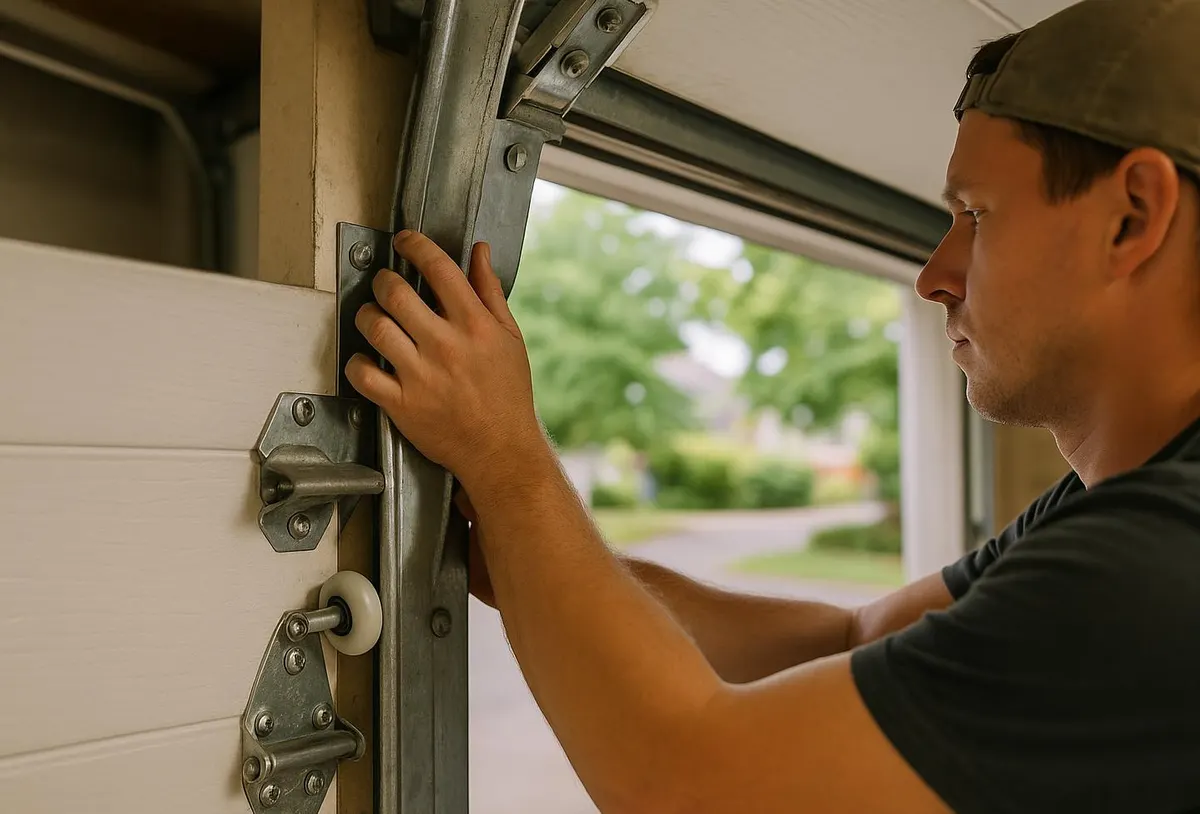
- Look at every hinge, bracket, and bolt. Storm-season wind load can loosen hardware even if the door never came off track. Snug anything that's wiggling before a cold front puts more stress on it.
- Check for rust spots, especially on rollers, tracks, and the bottom panel. Salt air corrosion often starts small — a dusting of orange on a roller or a rough patch on a track. Catching it now is a lot cheaper than catching it after a roller seizes.
- Inspect the weatherstripping along the bottom and sides of the door. Afternoon downpours are tapering off, which makes this the easier season to replace worn seals without rain interfering. Cracked, flattened, or gapped weatherstripping lets in drafts, dust, and the occasional curious lizard.
- Test the balance of the door. Disconnect the opener, lift the door halfway by hand, and let go. It should stay roughly in place. If it drops or shoots up, the springs are compensating poorly for the door's weight, and that's worth addressing before it fails completely.
- Listen for new noises. A door that got a little noisier over the summer — grinding, popping, or a scrape on one side — is often telling you a roller or cable is wearing out, not just that it needs oil.
- Lubricate the moving parts with the right product. Drier winter air is actually a good time to apply a silicone-based lubricant to hinges, rollers, and tracks, since it won't wash out the way it might during a summer storm. Avoid heavy grease, which attracts grit and dust.
- Check the auto-reverse safety feature. Place a block of wood in the door's path and close it. The door should reverse on contact. This matters year-round, but it's an easy thing to verify while you're already out there checking everything else.
Panels and Trim: What to Watch For
If your door has wood trim or composite panels, keep an eye out for small gaps or slight warping as humidity drops. Minor cosmetic shifts aren't usually urgent, but a panel that's visibly bowed, cracked, or separating at a seam is a different story — that's often a sign the panel took on moisture or stress during the wetter months and is now failing to hold its shape. Left alone, a compromised panel puts extra strain on the rest of the door's hardware every time it opens and closes.
What Wind-Load Rules Mean for an Older Door
If your garage door was installed years ago, it was built to the wind-load standards in place at the time. Homes along the coast and throughout Brevard County are generally held to stricter wind-load requirements than inland areas, and doors do age — tracks loosen, panels flex more than they used to, and reinforcement struts can corrode. Cooler months, with fewer storms in the immediate forecast, are a reasonable time to have an older door evaluated for how well it's actually holding up to current conditions, rather than finding out during the next storm season.
When to Call Indian Harbour Beach Garage Door Pro
Some of this is simple homeowner maintenance. But if you find rust that's eaten into a roller or track, hardware that keeps loosening no matter how many times you tighten it, or a door that's clearly out of balance, it's time to call in a professional. We handle Garage Door Tune-Up and Maintenance visits that cover exactly this kind of pre-season check — hardware, rollers, cables, weatherstripping, and balance — so small issues get caught before a cold front or the next storm season turns them into bigger ones. If we find springs that are fatigued or a cable that's fraying, our Cable and Roller Replacement service gets those parts swapped out properly rather than patched temporarily.
If your garage door in Indian Harbour Beach, Satellite Beach, Melbourne, or anywhere else in Brevard County is overdue for a real inspection, give Indian Harbour Beach Garage Door Pro a call. We'll get it checked, adjusted, and ready for whatever the season brings.